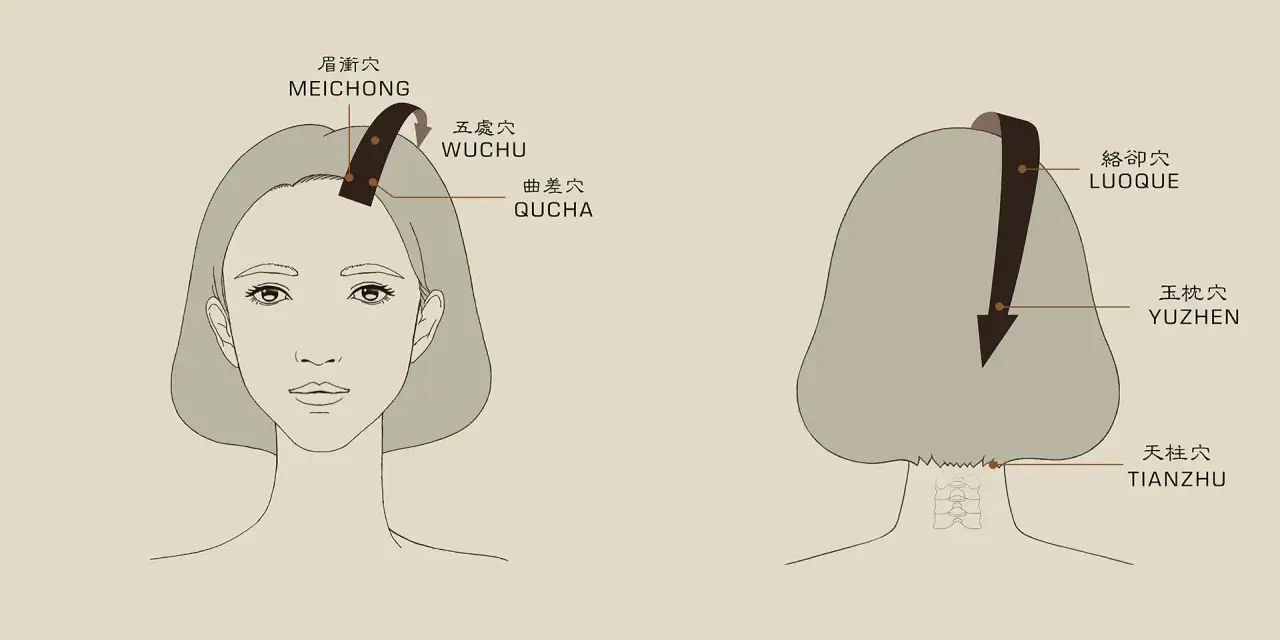
A good scalp massage can do more than feel pleasant: it can soften the tight, braced feeling that builds up in the forehead, temples, jaw, and neck. Learning to massage your head properly is less about force and more about pressure, pacing, and knowing which areas need a little extra attention. In practice, that means a simple routine you can use at home, plus a clear idea of when it helps and when to leave the area alone.
What you need to know before you start
- Use your fingertips, not your nails, and keep the pressure light to medium.
- Three to five minutes is enough for most at-home routines.
- It can ease tension and support relaxation, but it is not a cure for migraine or hair loss.
- Skip it over infected, broken, or very tender skin.
- Oils, brushes, and massagers are optional; consistency matters more than gadgets.
What a scalp massage can realistically do
I think of scalp massage as a small nervous-system reset. It may ease the “helmet” feeling that comes with stress, screen fatigue, and jaw clenching, and it can make the whole head-and-neck area feel less guarded. The NHS describes tension headaches as a tight band-like pressure around the head, often with tenderness, which is exactly the kind of pattern gentle massage may help you unwind a little.It can also be useful as a short evening ritual because the effect is not only physical. A few minutes of slow, repetitive touch gives the brain a clear signal to downshift. That said, I would keep expectations grounded: it may support comfort, but it does not replace proper treatment for migraine, scalp disease, or hair loss.
NHS hospital leaflets describe Indian head massage as a seated treatment that focuses on the scalp, neck, shoulders, and face, which is why it often feels like a full upper-body reset rather than a quick rub. Once you know what it can do, the next step is learning the safest way to do it at home.
How to do it at home without overdoing it
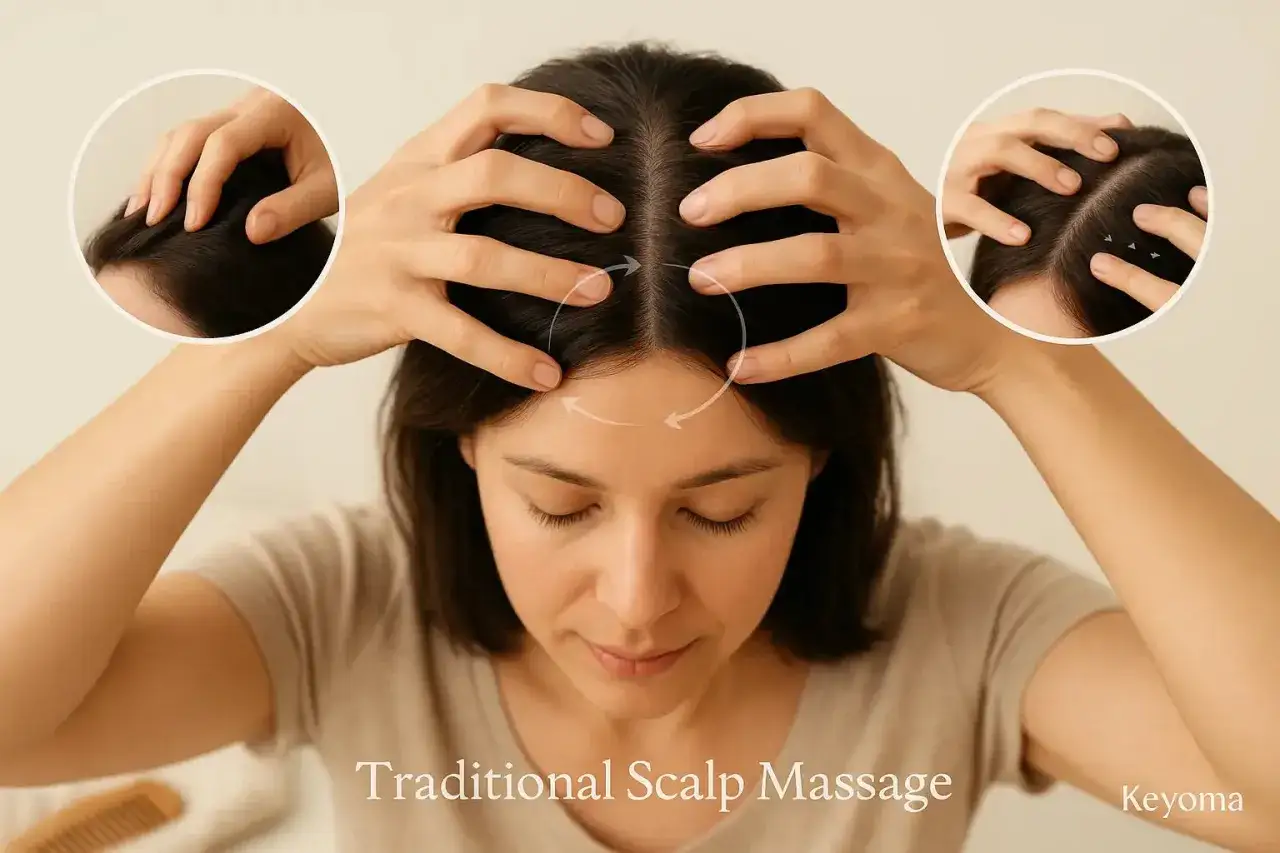
When I show someone the basics, I start with the simplest rule: soft hands, slow circles, no pain. You do not need special technique to get value from it. A clean pair of hands, a comfortable chair, and a few minutes of attention are enough.
- Settle your shoulders and unclench your jaw. Sit upright or lean back with your neck supported.
- Place the pads of your fingertips on your temples and make small circles for 20 to 30 seconds.
- Move across the scalp in sections: hairline, sides, crown, and the area just above the neck.
- Spend a little extra time where the scalp feels tight, but never push until it hurts.
- Finish with a few slow breaths and, if you like, gentle finger combing through the hair.
For most people, three to five minutes is enough to feel the difference. If you want a longer session, ten minutes is usually plenty. More pressure is not the goal; if you can feel yourself digging into the muscle, you are already doing too much. Gentle work tends to be more effective because tension usually releases when the body feels safe, not when it is being forced.
If you want to use oil, keep it minimal. A few drops is enough for slip, and you can choose a light, plain oil so your scalp does not feel greasy afterwards. From there, it helps to choose the right tool for the reason you are doing it.
The right tool depends on your goal
There is no single best method. I usually match the tool to the outcome someone wants, because that keeps the routine practical instead of fussy.
| Goal | Best option | How I would use it | Watch out for |
|---|---|---|---|
| Daily tension relief | Fingertips | 3 to 5 minutes of small circles across the scalp | Avoid nails and heavy pressure |
| Dry or tight-feeling scalp | A few drops of plain oil | Massage lightly, then wash out if needed | Too much oil can leave the roots flat and the scalp clogged-feeling |
| Shower-day exfoliation | Soft scalp brush | Use it gently while shampooing | Skip it if your scalp is irritated, inflamed, or sensitive |
| Deeper relaxation | Professional Indian head massage | A seated treatment that often lasts around 30 to 40 minutes | Choose a qualified therapist and tell them if you are uncomfortable |
If you want the closest thing to a low-effort daily habit, fingertips usually win. If you want a more spa-like reset, Indian head massage makes sense, and NHS trust leaflets commonly describe it as focusing on the scalp, neck, shoulders, and face. The tool matters less than the pressure, which also leads straight into the situations where massage is not the right move.
When a scalp massage is not the right move
The main rule is simple: if touch makes the area angrier, stop. NHS guidance on self-lymphatic drainage is clear that pressure should stay light and that you should not continue if it causes pain or if there is infection in the area. That is sensible advice for ordinary scalp massage too.- Do not massage over broken skin, open sores, fresh sunburn, or a rash that is actively inflamed.
- Skip it if you have an infection, swelling, or unusual tenderness on the head or neck.
- Be cautious if you have eczema, psoriasis, or dandruff with soreness, because even light rubbing can aggravate the skin.
- Do not use massage as a substitute for medical help if the headache is sudden, severe, one-sided, or comes with vision changes, weakness, numbness, fever, or confusion.
If you are dealing with persistent scalp pain, obvious hair shedding, or a headache pattern that keeps returning, I would rather see you speak to a GP or pharmacist than keep experimenting. Touch is useful, but it should never be used to ignore a warning sign. If the area is healthy enough for touch, the last question is how to make the habit stick.
What actually makes the difference over time
The people who get the most from head massage usually are not the ones who press hardest. They are the ones who do it often enough to calm their system before tension turns into a bigger problem. In practice, that can mean 60 seconds at the temples during a screen break, five minutes before bed, or a longer session once or twice a week after a shower.
I would keep the routine boring on purpose. Boring is repeatable, and repeatable beats impressive. If you remember only three things, make them these: keep the pressure gentle, keep the session short, and stop if the scalp starts to feel sore rather than soothed. That is the kind of self-care that actually earns its place in a real routine.