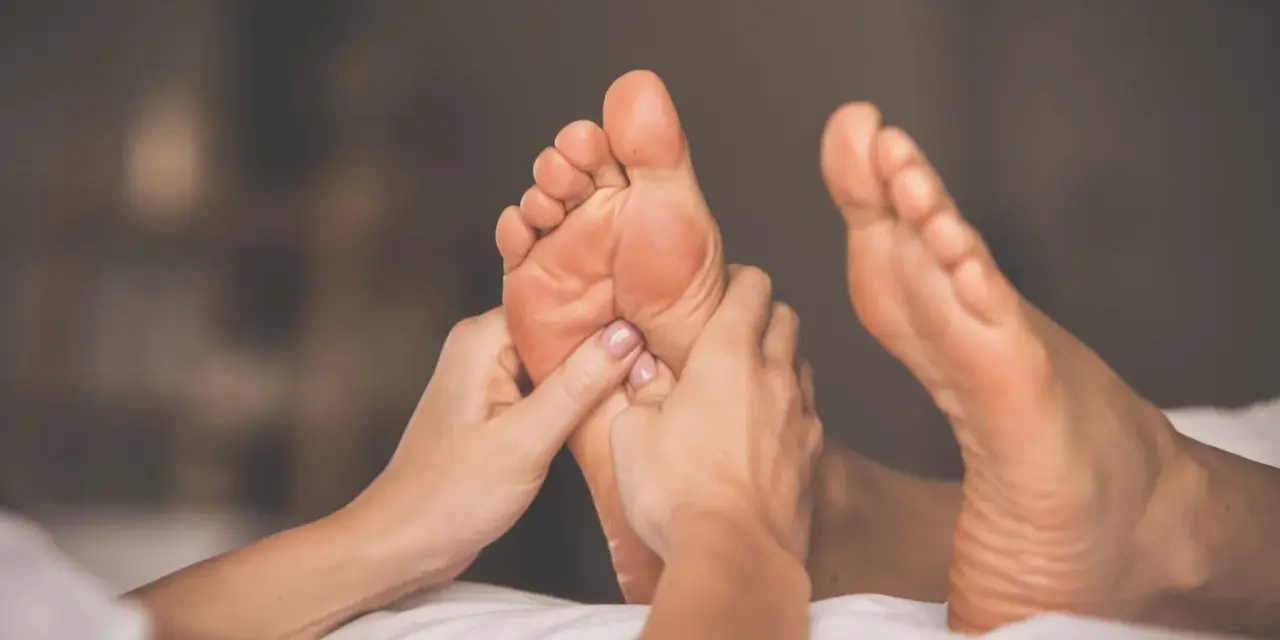
A good foot rub can settle tired legs, ease everyday tension, and make the end of a long day feel less punishing. I’m focusing here on what the technique actually does, how to do it safely at home, and when it is better to treat foot pain as a health issue rather than a self-care problem. That matters because the best results usually come from gentle, consistent pressure, not from digging into sore tissue.
The practical version is simple: keep it gentle, local, and consistent
- Use light to moderate pressure for about 5 to 10 minutes per foot if your goal is relaxation.
- Moisturising cream or oil can reduce friction and make the touch smoother.
- A tennis ball or massage ball can help the arch, but only when the tissue tolerates pressure well.
- Stop if there is sudden swelling, redness, heat, numbness, broken skin, or sharp pain.
- Massage is useful for comfort and tension, but it does not replace diagnosis when pain keeps returning.
- Reflexology is a separate, more structured therapy and should not be confused with ordinary massage.
What a foot massage actually changes in the body
When I think about foot massage, I do not think about dramatic fixes. I think about a small, useful reset. The feet carry load all day, so the muscles, fascia, joints, and skin can feel tight, overworked, or simply tired. A gentle treatment helps by easing that local tension and, just as importantly, by calming the nervous system.
A foot rub is usually less about repairing the foot and more about lowering the body’s overall tension level. That is why it can feel surprisingly effective even when the pressure is light. The arch may soften, the heel may feel less grippy, and the rest of the body often follows that change. I also find it useful before bed, when the goal is less “treat the problem” and more “let the system switch off.”
This is also why pressure matters. Too little touch may feel pleasant but do nothing useful; too much can make a sensitive foot brace against you. The sweet spot is firm enough to be felt, gentle enough that the tissue stays relaxed, and that balance leads neatly into when a massage is actually the right tool.
When it helps most and when I would not rely on it
In practice, foot massage tends to help most when the issue is general tightness, fatigue, or mild overuse. It is useful after standing for hours, after a long walk, after a training session once the feet have cooled down, or in the evening when the arches feel as if they have done more work than the rest of the body.
- After a long day on your feet
- After moderate exercise, once the foot is no longer hot or inflamed
- Before sleep, if tension is the thing keeping you alert
- With mild plantar fascia stiffness, alongside stretching and load management
- As part of a general self-care routine for dry or tired feet
There are also times when I would not treat it as ordinary self-care. If one foot is suddenly swollen, hot, red, or much more painful than the other, I would stop and look for a medical explanation. The same goes for broken skin, infection, a fresh injury, unexplained numbness, or a foot that feels weak or unstable. In those situations, massage is not the first move.
That distinction matters because a massage can soothe a symptom that is harmless, but it can also hide a problem that needs proper assessment. Once that is clear, the next question is how to do the massage without making the foot grumpy the next day.
How I would do a safe home routine
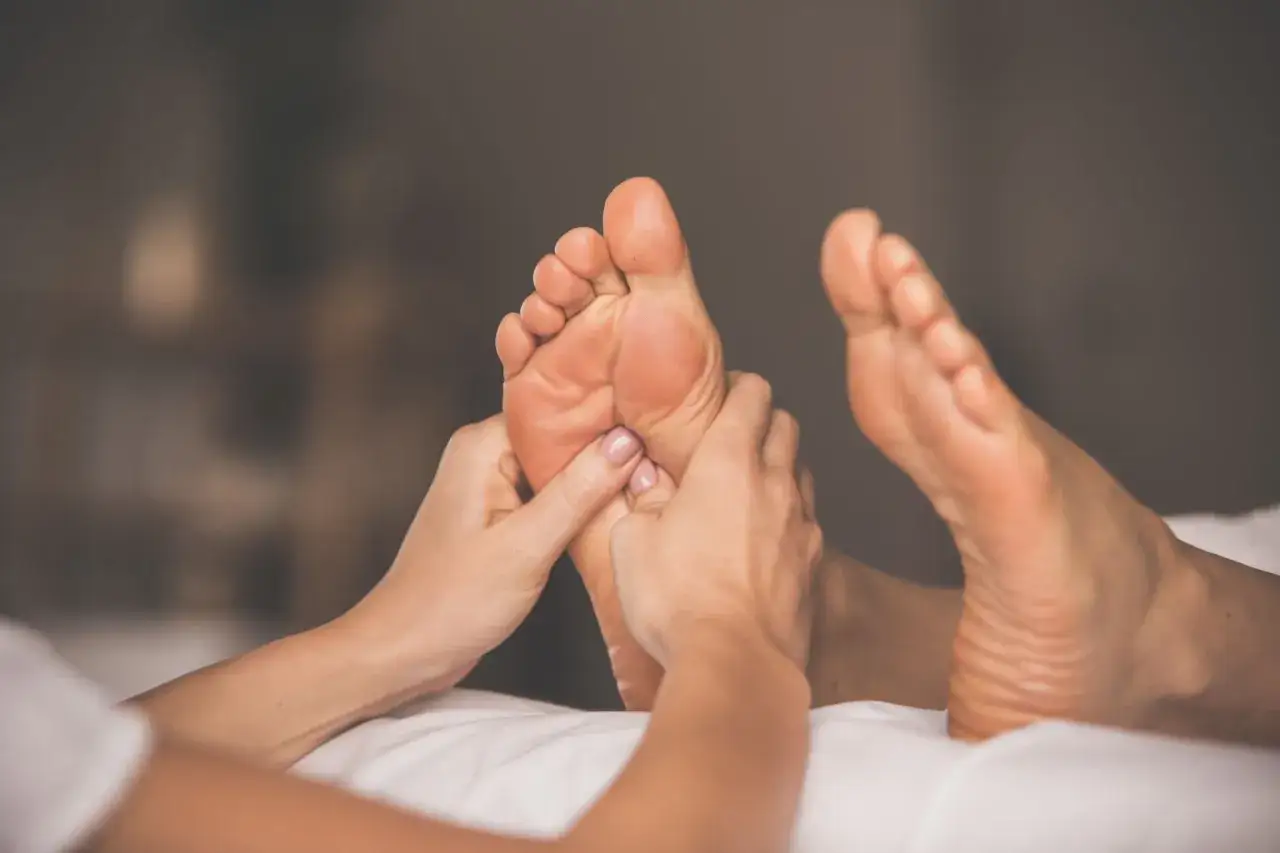
For a home routine, I keep things simple. I start with a clean, dry foot, a chair with good support, and a little moisturising cream or oil so the skin does not drag under the thumb. A UK NHS foot-care leaflet notes that this kind of gentle massage can help keep the skin in good condition and support comfort, which matches what I see in real life: it works best when it is calm rather than aggressive.
- Warm your hands and rest the foot on your thigh or a cushion.
- Apply a small amount of cream or oil so your hands glide instead of pinch.
- Use slow circles across the heel, arch, and ball of the foot.
- Spend about 1 to 2 minutes on the arch if it feels tight, then move on rather than drilling one spot.
- Finish with gentle toe pulls and ankle circles.
- Keep the whole session to about 5 minutes per foot for relaxation, or up to 10 minutes if the tissue is comfortable.
The best foot rub is the one you can repeat the next day without soreness. If pressure leaves the foot more tender after a few hours, I would scale back rather than push through it. A useful rule is to keep discomfort around 3 to 5 out of 10 at most, and never chase sharp pain. That keeps the routine restorative instead of turning it into another stressor.
For people who want a more targeted approach, simple self-massage can sit alongside stretching quite nicely. In other words, it should support movement, not replace it, which is why the tools you choose matter more than most people assume.
The tools that make it easier or worse
There is no prize for buying the most expensive device. The right tool depends on what the foot needs, how sensitive it is, and whether you want relaxation or a more focused release. I usually think in terms of friction, control, and pressure.
| Tool | Best for | Trade-off |
|---|---|---|
| Hands | General relaxation and the most control over pressure | Thumbs can tire quickly if you do too much |
| Cream or oil | Smoother strokes and dry skin | Too much can make the foot slippery and harder to hold |
| Tennis ball or massage ball | Arch tightness and heel release | Can feel too intense if the tissue is already irritated |
| Electric foot massager | Relaxation without using your hands | Not ideal for swollen, tender, or highly sensitive feet |
I tend to use a ball only when the foot feels stiff rather than angry. If the arch is hot, swollen, or very sensitive, a ball is the wrong tool because it adds force without enough feedback. If the skin is dry but not sore, cream or oil is the better choice because it reduces friction and makes the session feel smoother.
That choice also affects the kind of therapy you are actually doing, which is where people often blur the line between massage and reflexology.
Massage, reflexology, and when the label matters
Not every treatment on the feet is the same. Reflexology is a more specialised therapy that uses pressure on specific points of the feet, and the Royal Marsden describes it as a distinct complementary treatment rather than a general rub-down. Some people enjoy it because the structure feels calming and deliberate; others want something simpler and more direct.
My view is straightforward: if your main goal is relaxation, general tension relief, or easier recovery after standing all day, a plain massage is enough. If you want a more ritualised, point-based session, reflexology may suit you better. What it should not do is promise to diagnose or cure everything through the feet alone.
This is the point where I remind people to be honest about expectations. A massage can make you feel looser, and it may help with comfort, but persistent pain, swelling, or structural problems need a different kind of answer. That brings us to the signs that the feet are asking for more than self-care.
When foot pain needs more than self-care
Foot pain is often blamed on tiredness, but the cause can be much more practical: shoes that are too tight, too much walking or running, changes in load, skin problems, arthritis, or a foot shape that puts pressure in the wrong place. A massage may still help, but only as part of a wider response.
- Stop and get advice if the pain is sudden, severe, or linked to an injury.
- Do not massage through redness, heat, open skin, or signs of infection.
- Be cautious if you have diabetes, reduced sensation, poor circulation, or nerve symptoms.
- Seek help if swelling is unexplained or one calf becomes painful and enlarged.
- If the problem keeps returning after 1 to 2 weeks of sensible self-care, have it assessed.
UK NHS physiotherapy advice for plantar fascia pain often combines self-massage with stretching and strengthening, and that is the more realistic model. Massage can temporarily reduce discomfort, but it works best when the load on the foot also changes. If the underlying trigger stays the same, the relief will stay short-lived.
Once pain is properly understood, the goal shifts from chasing symptoms to building small habits that keep the feet calmer between sessions.
The small habits that make foot care work better
The most useful routines are rarely dramatic. I get better results from short, repeatable habits than from one intense session followed by three days of soreness. A few minutes after a shower, a brief massage before bed, and footwear that does not crush the forefoot are often enough to make a real difference over time.
- Keep sessions short and regular rather than rare and forceful.
- Pair massage with calf stretches if the arch feels tight.
- Use moisturiser after washing the feet, but keep the toes dry if moisture tends to linger there.
- Choose footwear that supports the foot instead of forcing it to work harder.
- Back off if the next day is worse, not better.
For me, that is the real value of foot care: it should make daily movement easier, not turn into another task that demands perfection. If the pressure stays gentle, the routine stays realistic, and the body actually responds, the feet usually tell you fairly quickly that you have got the balance right.