
A warm Epsom salt foot soak is one of the easiest ways to reset tired feet after a long day on them. This guide explains how to soak feet in epsom salt without making the routine too hot, too strong, or too long, and it covers the practical details that matter most: what to use, how long to stay in, what to do afterwards, and when to skip the soak altogether.
The main things to get right
- Use a clean basin and warm, not hot, water.
- Start with about half a cup of Epsom salt and enough water to cover your feet to the ankles.
- Keep the soak short: 15 to 20 minutes is usually enough for a foot bath.
- Dry between the toes carefully and moisturise afterwards.
- Do not soak damaged, infected, or numb feet without checking first with a clinician.
What you need before you start
I keep the setup very simple because the less fuss there is, the more likely the soak is to become a habit. All you need is a clean basin or foot spa, plain Epsom salt, warm water, a towel, and a moisturiser for after the soak.
If the goal is a calm, practical foot care routine, I would choose unscented Epsom salt rather than a heavily fragranced blend. Scented products can be pleasant, but they are not automatically better, and sensitive skin often prefers fewer ingredients. A timer is also useful, because a foot soak feels relaxing and it is easy to stay in longer than you meant to. With those basics in place, the soak itself is quick.
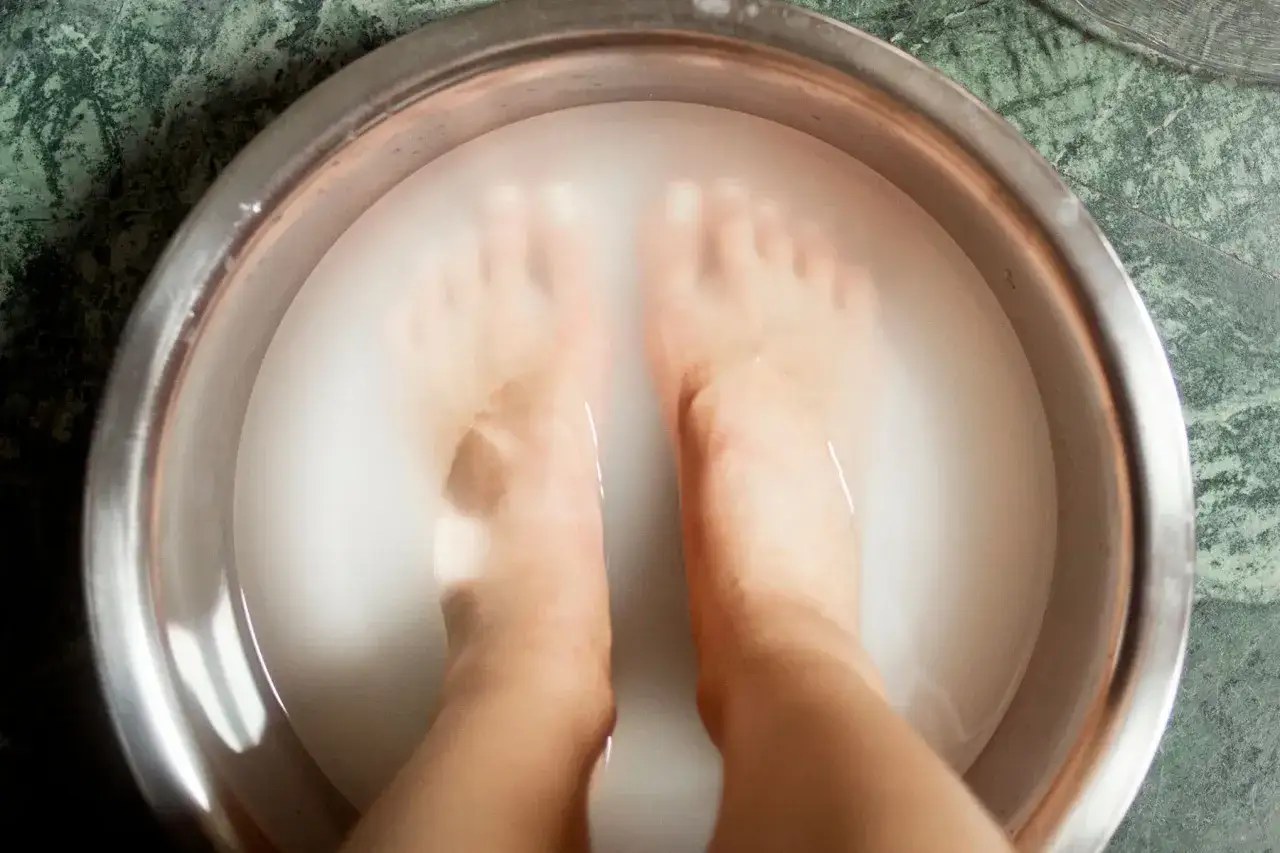
How to prepare the basin
- Wash the basin or foot spa before you use it.
- Fill it with warm water deep enough to cover your feet and ankles.
- Add the Epsom salt and stir until it dissolves.
- Check the temperature with your wrist or elbow. It should feel warm, not hot.
- Set a towel nearby so you can dry your feet immediately afterwards.
I would not use very hot water, even if the feet feel stiff, because heat can make skin more irritated and can leave the soak feeling less soothing than intended. If the water feels borderline hot in your hand, it is too hot for your feet. Once the basin is ready, the steps are straightforward.
How much Epsom salt to use and how long to soak
For a standard foot soak, I usually recommend starting with about half a cup of Epsom salt in enough warm water to cover the feet to the ankles. That gives you a mild solution that is easy to tolerate and simple to repeat.
| Goal | Epsom salt | Water level | Soak time |
|---|---|---|---|
| General relaxation | About 1/2 cup | Up to the ankles | 15-20 minutes |
| Tired, achy feet | About 1/2 cup | Enough to fully cover the feet | 15-20 minutes |
| Rough, dry skin | Keep it modest | Warm, not hot | 10-15 minutes |
For foot care, longer is not automatically better. Once you go much past 20 minutes, the skin can start to look wrinkled and feel dry, which defeats part of the purpose. If the water cools quickly, it is better to stop than to keep topping it up with hotter water. The final part is what you do after the feet come out.
What to do after the soak
The aftercare matters as much as the soak itself. Dry your feet thoroughly with a clean towel, especially between the toes, because trapped moisture can create a softer, more fragile skin surface.
- Pat the skin dry instead of rubbing it hard.
- Apply moisturiser to the tops and soles of the feet.
- Avoid putting rich cream between the toes if those areas tend to stay damp.
- Put on clean socks if you are going to wear shoes again soon.
- Check for cracks, redness, blisters, or areas that stayed sore during the soak.
If the skin is soft enough for gentle filing, I would only use a pumice stone on rough patches and never on broken skin. That keeps the routine useful without making the skin more vulnerable. After that, it is worth knowing when a soak is the wrong choice.
When to skip it or ask for advice first
Not every foot should be soaked, even in something as familiar as Epsom salt. If you have diabetes, reduced feeling in your feet, poor circulation, open cuts, blisters, weeping skin, or signs of infection, I would check with a podiatrist, GP, or other clinician before making foot soaks part of your routine.
- Do not soak feet that are red, hot, swollen, or oozing.
- Do not treat a wound or suspected infection with a soak instead of medical care.
- Be cautious if your skin is already very dry, cracked, or easily irritated.
- Stop immediately if the water stings, burns, or makes the skin look worse.
The reason I am strict about this is simple: a foot soak is meant to comfort skin, not mask a problem that needs proper treatment. If the soak is suitable, the next challenge is not overdoing it.
Common mistakes that make the soak less useful
Most poor results come from a few very predictable mistakes, and they are easy to avoid once you know what to watch for.
- Using water that is too hot because it feels more relaxing at first.
- Adding too much salt and turning a gentle soak into a harsh one.
- Staying in too long and drying the skin out.
- Skipping the drying step, especially between the toes.
- Using the soak every day as a fix for a problem that keeps coming back.
I also see people expect Epsom salt to do everything at once. It can be a good comfort measure, but it is not a cure for structural foot pain, persistent swelling, infection, or ongoing skin breakdown. That makes it easier to turn the soak into a simple routine instead of an occasional guess.
What I would keep in mind if you make this a routine
For most people, once or twice a week is enough. That is usually frequent enough to make the feet feel cared for without pushing the skin into dryness. I like to pair the soak with a quick foot check, because a few extra seconds can catch a blister, crack, or sore spot before it becomes a bigger issue.
If your feet feel better after a shorter soak, keep it short. If they feel dry afterwards, reduce the time or use less salt. If you notice repeated pain, swelling, numbness, or skin changes, the soak is no longer the main story and it is time to look at the underlying cause. A good foot soak should feel like maintenance, not like a daily rescue mission.
Keep the routine modest, warm, and clean, and it will usually do exactly what most people want from it: soften rough skin, ease tired feet, and give you ten quiet minutes of proper care. That is the simplest version of foot soaking that still feels thoughtful, and it is the version I would trust first.