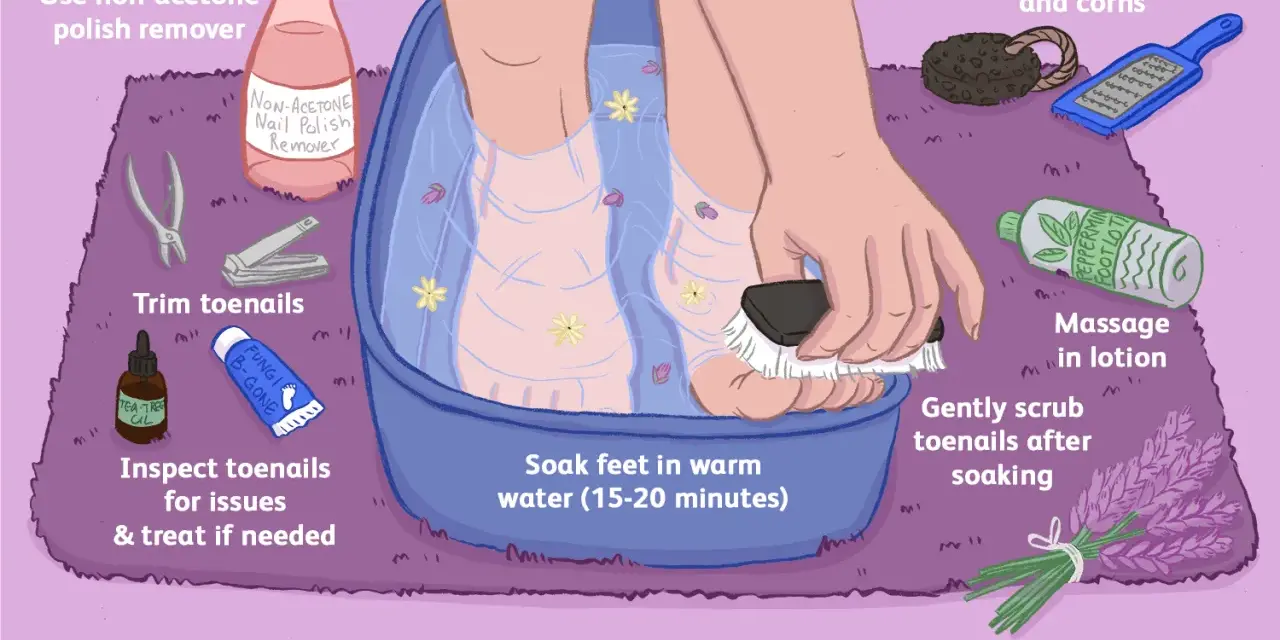
A good foot soak makes the rest of a home pedicure easier: hard skin softens, nail edges clean up more neatly, and the feet feel less tight afterwards. The practical answer to what to put in water for pedicure at home is usually warm water plus one targeted add-in, not a long list of kitchen ingredients. I usually keep the routine simple, then choose the soak based on whether the goal is softness, odour control, or just a calmer, cleaner finish.
The safest way to soften feet before a home pedicure
- Warm water is the base; it does most of the softening work on its own.
- Epsom salt is the most versatile add-in for dry, tired, or mildly rough feet.
- Diluted vinegar can help most when odour is the main issue, but it can sting cracked skin.
- Baking soda is better for smell than for serious skin problems, and it should not be overused.
- Keep essential oils heavily diluted, or skip them if your skin is reactive.
- People with diabetes, reduced sensation, open skin, or poor circulation should not do casual foot soaks without professional advice.
What the water should actually do
Warm water does the heavy lifting. The aim is to soften dead skin just enough that filing, trimming, and moisturising become easier. I keep the water around body temperature, not hot, and I usually stop at 10 to 15 minutes. If the skin starts to look wrinkled, pale, or flimsy, that is a sign you have gone past useful softening and into maceration, which is the soggy, over-softened state that tears more easily.
For a pedicure soak, I want three things: comfort, control, and a clean finish. That means a basin deep enough to cover the feet, a temperature that feels pleasantly warm, and just one purpose for the soak at a time. Once that base is right, choosing an additive becomes much more straightforward.
From there, the next step is deciding which ingredient earns its place in the basin.
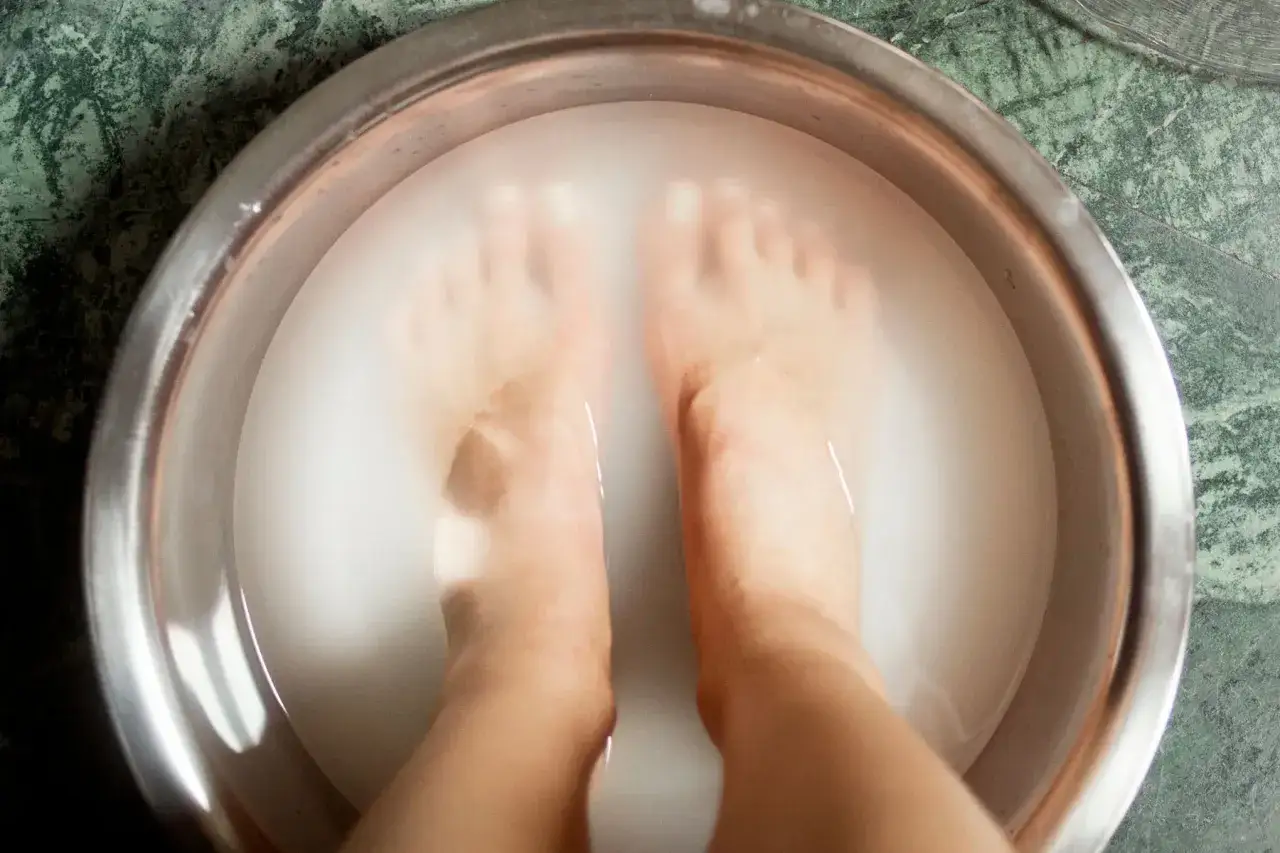
The ingredients I would actually use
When I narrow it down to practical options, I keep coming back to a small group of add-ins that people really use successfully. Some are for softness, some for odour, and some are simply for a more pleasant soak. I do not treat them as miracle fixes, just as tools with different jobs.
| Ingredient | How to use it | Best for | Watch out for |
|---|---|---|---|
| Plain warm water | Use on its own for 10 to 15 minutes | Sensitive feet, first-time soaks, general prep | Do not make the water too hot or soak for too long |
| Epsom salt | About 1/2 cup in a medium basin | Dry, tired, or mildly rough feet | Dissolve it fully and keep the soak short |
| Mild liquid soap | A small squeeze or about 1 teaspoon | Everyday cleansing and sweaty feet | Choose a gentle, fragrance-free version if your skin is reactive |
| White vinegar or apple cider vinegar | Mix 1 part vinegar with 2 to 3 parts warm water | Odour control and mild support for fungus-prone feet | Can sting cracked skin, freshly shaved skin, or eczema-prone areas |
| Baking soda | Use 1 to 2 tablespoons in the basin | Foot odour and surface roughness | Can feel drying if you use it too often |
| Essential oil, diluted first | 1 or 2 drops mixed into a teaspoon of carrier oil before adding it | Fragrance, not treatment | Never use it neat; skip it if your skin is sensitive to scent |
If I had to pick just one option for most home pedicures, I would choose Epsom salt. If odour is the main complaint, I would go with diluted vinegar or baking soda, but not both together. The next question is just as important: what looks useful on social media but is not a good idea in a real foot soak.
What I would not put in the bowl
Some popular add-ins sound clever but create more problems than they solve. I avoid undiluted essential oils, lemon juice on cracked skin, hydrogen peroxide, alcohol, very hot water, and strong fragranced bath products. They can irritate the skin, dry it out, or make it harder to tell whether a foot is genuinely sore or just over-exposed to something harsh.- Undiluted essential oils can burn or trigger irritation, especially on thin skin.
- Lemon juice is too acidic for broken, cracked, or freshly shaved skin.
- Hydrogen peroxide and alcohol are drying and usually too aggressive for a pedicure soak.
- Bath bombs and heavily perfumed products may leave residue and add unnecessary fragrance.
- Vinegar plus baking soda makes a showy fizz, but it mostly cancels the point of using both.
A home pedicure should calm the skin, not challenge it. If the feet sting, go red quickly, or feel tight after the soak, I rinse them and keep the next one plain. That usually gives a better result than trying to outsmart the skin with a more complicated recipe.
Once the basin is stripped back to what actually works, the routine itself becomes much easier to follow.
How I would do the soak step by step
When I want a clean pedicure result, I follow the same routine every time. It is simple, but the order matters.
- Wash the basin before you start, especially if it has been stored under a sink or used for other jobs.
- Fill it with warm water and test the temperature with your wrist or elbow. It should feel comfortably warm, not hot.
- Add one ingredient only. A half cup of Epsom salt, a small squeeze of mild soap, or a diluted vinegar mix is enough.
- Soak the feet for 10 to 15 minutes. That is usually long enough to soften the skin without overdoing it.
- Dry the feet carefully, especially between the toes, before you use any tools.
- Use a pumice stone or foot file gently on softened hard skin, then stop once the surface looks smoother.
- Finish with moisturiser straight away so the skin does not lose the water you just added.
I also keep cuticle work minimal. A gentle push-back is enough for most people; cutting or digging around the nail folds is where a tidy pedicure turns into irritated skin. With that routine in place, the final decision is which soak matches the actual foot problem in front of you.
Choose the soak that matches the problem
I find it helpful to match the ingredient to the reason for soaking rather than using the same mix every time. That way, the result feels intentional instead of random.
| Foot issue | Best soak choice | Why it helps | What I would avoid |
|---|---|---|---|
| Hard skin and rough heels | Epsom salt in warm water | Softens the surface so filing is gentler | Very hot water and long soaking sessions |
| Foot odour | Baking soda or diluted vinegar | Helps reduce smell and freshen the feet | Using both together in the same basin |
| Dry, tired feet | Plain warm water or Epsom salt | Comforts the skin without overloading it | Strong acids, alcohol, or heavy fragrance |
| Sensitive or reactive skin | Plain warm water with a little mild soap | Gets the feet clean with the least risk of irritation | Vinegar, lemon juice, and undiluted oils |
| Mild fungus-prone feet | Diluted vinegar soak | Can help with odour and surface cleanliness | Expecting it to replace proper treatment |
If the problem is redness, itching between the toes, a thickened or discoloured nail, or a crack that keeps reopening, I stop thinking in pedicure terms and start thinking in foot-care terms. A pharmacist or podiatrist in the UK is the right next step when the issue looks more like a skin or nail problem than a simple rough-skin issue. Soaks can support comfort, but they do not treat infection.
That distinction matters, because a lot of disappointment comes from using the right soak for the wrong job.
The finish that keeps the result longer
The best aftercare is plain and slightly boring, which is exactly why it works. After soaking, I pat the feet completely dry, apply a thicker moisturiser or heel balm, and put on cotton socks if the skin feels especially dry. For rough heels, a urea cream in the 10 to 25 per cent range often does more than another round of soaking, because it helps soften and hold moisture in the skin rather than just loosening it temporarily.
I also keep the frequency sensible. Once a week is enough for most home pedicures, and daily soaking is usually too much for feet that are already dry or fragile. UK NHS foot-care guidance for people with diabetes advises against casual soaking, so if you have reduced sensation, poor circulation, swelling, open skin, or any wound that is not fully settled, skip the basin and get professional advice instead. For everyone else, the simplest formula still wins: warm water, one gentle add-in, careful drying, and moisturiser afterwards.