
The safest version is a short warm soak with one simple ingredient and careful drying
- Foot soaks can soften hard skin, reduce the feeling of fatigue, and make feet easier to clean, but they do not remove toxins from the body.
- Warm, not hot, water and a 5 to 10 minute soak are usually enough for healthy feet.
- Epsom salt is the most practical first option; baking soda and chamomile are gentler alternatives.
- Dry between the toes and moisturise the tops and soles straight after soaking.
- Skip soaking if the skin is broken, infected, numb, or high-risk because of diabetes or poor circulation.
What this kind of soak can really do
The honest answer is simpler than the marketing. A foot soak can loosen dirt, soften thick skin, calm the feeling of heavy feet, and make a quick self-care ritual feel more restorative. That is useful in itself, and I would not dismiss it. But it is not a body cleanse in any medical sense.
Cleveland Clinic has pointed out that ionic footbaths have not been shown to remove toxins from the body, and that matches the way I read this topic: the value is in comfort, hygiene, and skin care, not in purging the bloodstream. Your liver, kidneys, and gut do the detoxification work. The soak just gives your feet a cleaner, softer reset. Once you see it that way, the whole routine becomes much easier to do well.
How to do a safe foot soak at home
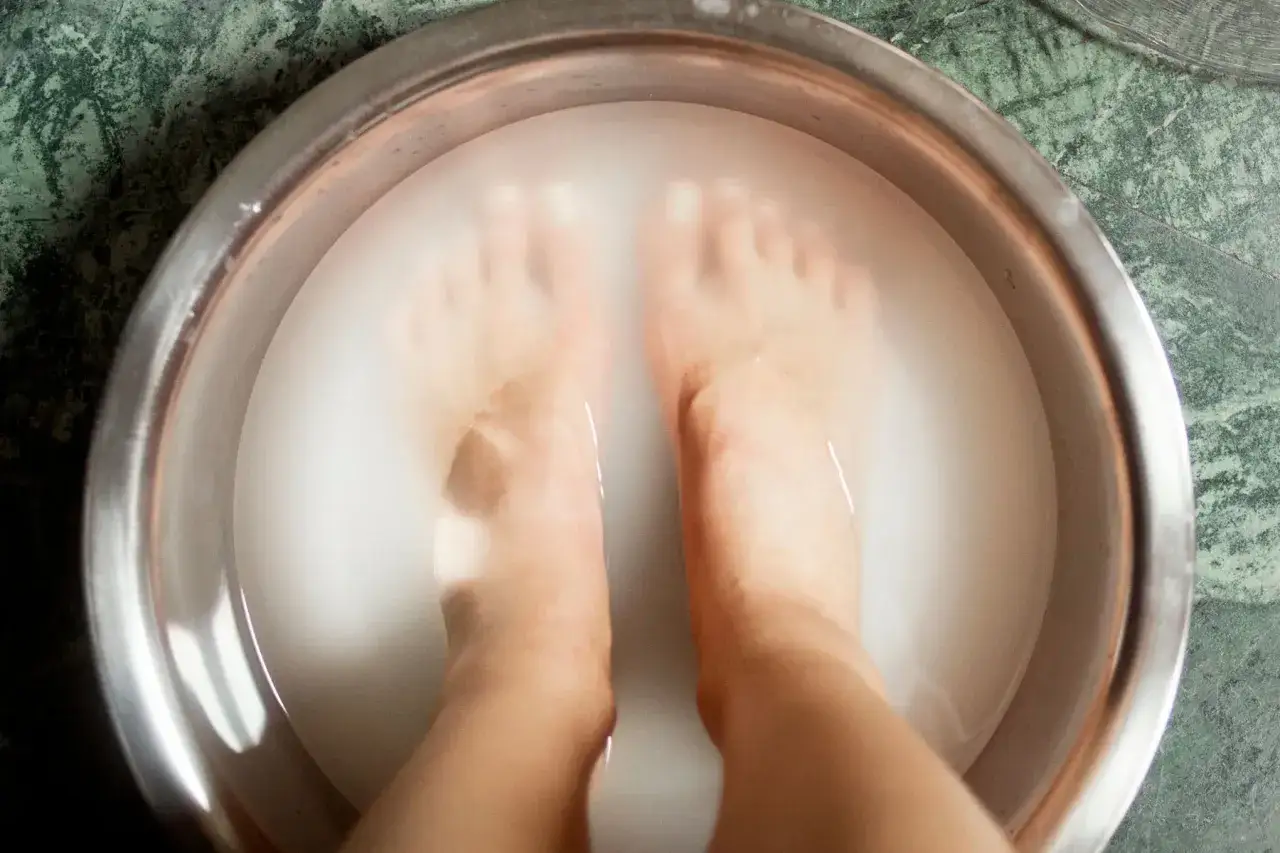
I keep the method deliberately plain. The more ingredients people add, the more likely they are to irritate the skin or create a mess they cannot really explain. A good soak needs a clean basin, warm water, one chosen ingredient, a towel, and a moisturiser ready afterwards.
- Fill a clean wash basin or foot tub with enough warm water to cover your feet up to the ankles.
- Add just one ingredient to start with, rather than mixing several remedies at once.
- Soak for 5 to 10 minutes. If your skin is dry or sensitive, stay on the shorter end.
- Test the water carefully before you step in. If you have reduced sensation, use your elbow or a thermometer rather than guessing.
- When you finish, dry your feet thoroughly, especially between the toes.
- Apply moisturiser to the top and bottom of the feet, but keep cream out of the spaces between the toes.
If your feet feel tight, wrinkled, stung, or red afterwards, the water was too hot, the soak was too long, or the ingredient was too strong. That is your cue to simplify next time. The next question is which natural ingredient is actually worth putting in the water.
Which natural ingredients are worth trying
I usually start with one ingredient only. That makes it easier to tell what genuinely helps and what just feels more elaborate. For most people, the best results come from keeping the recipe small and choosing the ingredient that matches the problem, not the trend.
| Ingredient | Best for | Simple mix | Main caution |
|---|---|---|---|
| Epsom salt | Tired, achy feet and light softening | About 1/2 cup in a standard basin | Can dry the skin; skip if you have open cuts or broken skin |
| Baking soda | Odour, sweat, and residue | About 1 tablespoon in a basin | Can sting cracked or very sensitive skin if used too often |
| Chamomile tea | A gentle, calming soak | 2 to 4 tea bags steeped in hot water, then cooled | Very mild effect; think comfort rather than treatment |
| Sea salt | Light cleansing and sweaty feet | 1 to 2 tablespoons in a basin | May sting on cuts, cracks, or freshly shaved skin |
| Apple cider vinegar | Odour-prone feet | 1 part vinegar to 3 parts water | Avoid on eczema, fissures, or very dry skin |
If you want scent, I would still be cautious with essential oils. They can be useful, but only if they are properly diluted and your skin tolerates them. I would not make tea tree oil the default choice, and I would never use it on broken skin. The safest starting point is still one simple soak, not a kitchen-sink blend of everything that sounds natural.
When you should skip soaking entirely
There are situations where a soak is the wrong tool. NHS podiatry advice is much stricter for people with diabetes, reduced sensation, or fragile skin: wash gently, dry carefully, and avoid long soaking because skin can become damaged more easily. I would follow that caution closely.
- Do not soak if you have diabetes unless your podiatrist or GP has said it is safe for you.
- Do not soak open wounds, blisters, ulcers, or any area that is already broken.
- Stop if the foot becomes more red, swollen, hot, painful, or starts to ooze.
- Avoid soaking if you have poor circulation or numbness, because hot water can cause injury without warning.
- Be careful with eczema, dermatitis, or very dry skin, because repeated soaking can make the skin more fragile.
If your feet smell strongly, itch, or peel despite good hygiene, a soak may not be enough on its own. That is especially true if the issue is fungal, because too much moisture can make the problem worse. When in doubt, I would rather have someone checked early than keep experimenting with home remedies that are not changing the underlying issue.
How to choose the right soak for the problem
The most useful foot care is usually targeted, not dramatic. If you match the soak to the actual complaint, you get more benefit with less irritation. This is where I see people make the biggest improvement.
| What you want help with | Best simple choice | Why it helps | What I would avoid |
|---|---|---|---|
| Tired feet after standing all day | Epsom salt in warm water | Feels soothing and helps the skin relax before drying and moisturising | Hot water and long sessions that leave the skin wrinkled and tight |
| Odour or sweaty feet | Plain warm water with a little baking soda or mild soap | Helps clean away sweat and residue before you dry thoroughly | Heavy oils, thick creams, and anything that leaves the skin damp between the toes |
| Rough heels and hard skin | Brief Epsom salt soak followed by a gentle foot file | Softens the surface so you can smooth it without scraping too hard | Aggressive filing, blades, or very long soaking |
| Sensitive or easily irritated skin | Plain warm water or cooled chamomile tea | Low-friction option with less chance of stinging | Vinegar, strong essential oils, and mixed recipes |
I like this approach because it keeps the ritual honest. You are not trying to force a dramatic effect from the water; you are picking the mildest option that solves the actual problem. That leads neatly into what matters after the soak, because drying and protection decide whether the result lasts.
What to do after the soak so the benefits last
The soak itself is only half the job. If you leave moisture sitting on the skin, especially between the toes, you lose a lot of the benefit and may even create a better environment for irritation or fungal problems. This is the part people skip, and it is the part that usually matters most.
- Pat the feet dry, then dry between the toes with a clean towel.
- Moisturise the top and sole of the foot, but keep cream out of the toe gaps.
- If you use a pumice stone or foot file, be gentle and do it only on softened hard skin.
- Put on clean, breathable socks after the skin has dried.
- Let shoes dry fully between wears, especially if your feet sweat a lot.
- Trim toenails straight across if they need attention, but do not cut too deeply into the corners.
For most healthy adults, I would keep the routine to two or three times a week at most. If your skin starts feeling tighter or drier, scale it back. Foot care works best when it leaves the skin calmer, not when it turns into a constant stripping and re-soaking cycle. That is why I prefer a simple routine over a complicated one.
The routine I would actually use at home
If I were setting this up for myself, I would keep it very plain: warm water, half a cup of Epsom salt, 5 to 10 minutes, then careful drying and a light moisturiser. If I wanted a softer option, I would swap the salt for chamomile tea. If odour was the main issue, I would choose a little baking soda and focus just as much on socks, shoes, and drying the feet properly.
- Use one ingredient at a time.
- Keep the soak short.
- Dry the feet completely.
- Moisturise the tops and soles, not between the toes.
- Stop if the skin stings, splits, or turns red.
If the problem is persistent cracking, swelling, numbness, a rash, or a smell that does not improve with good hygiene, I would stop treating it as a self-care trend and ask a podiatrist or GP to look at it. Otherwise, the simplest version is usually the best version: clean water, a mild ingredient, and good drying afterwards. That is what makes the ritual feel restorative without pretending it is doing something the body already handles on its own.