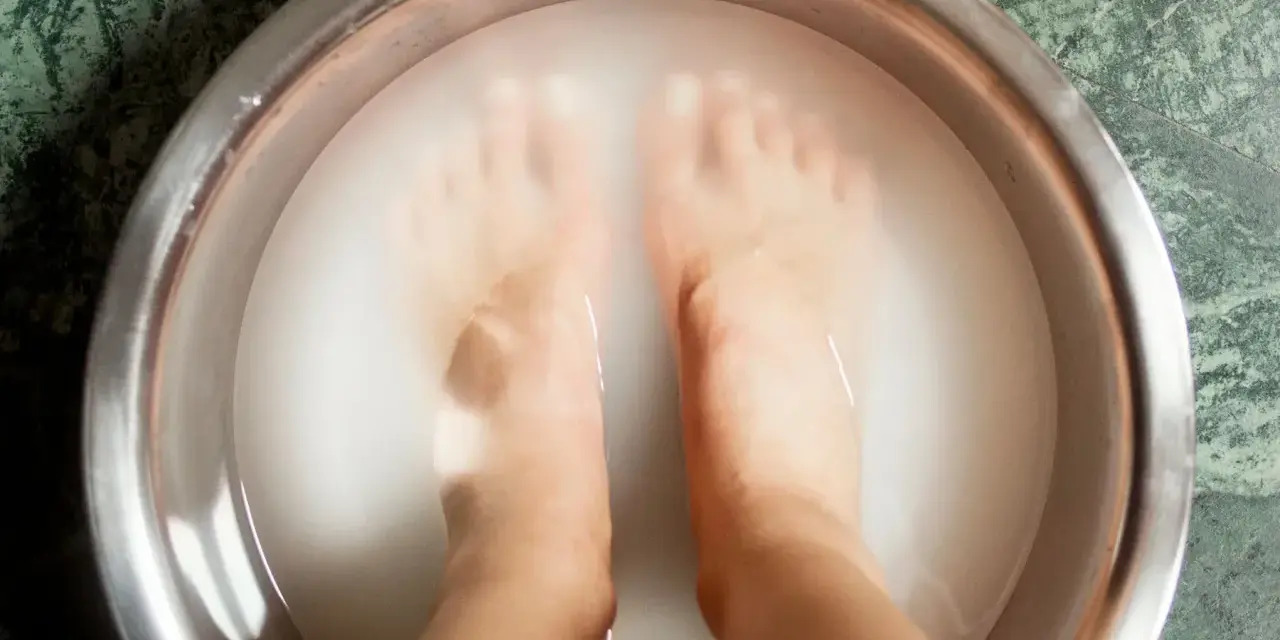
The safest foot soak is the one that matches the problem
- For most people, 10 to 15 minutes is enough; longer is more likely to dry the skin than help it.
- Plain warm water is often enough for tired feet, while salt or Epsom salt can help soften rough skin.
- Dry between the toes every time, then moisturise the soles and heels.
- If you have diabetes, numbness, poor circulation, open wounds, or signs of infection, do not treat soaking as routine care.
- For an ingrown toenail, warm salty water can help as a first step, but it is not a substitute for proper treatment if symptoms worsen.
Why a foot soak helps, and where the limit is
The main benefit is not mystical. Warm water relaxes the tissues, loosens debris, and makes dry skin softer, which is why a soak can turn rough, tired feet into something easier to moisturise or gently file. In my view, that last step is where most of the value lives: the soak prepares the skin, but the cream or careful grooming does the real finishing work.
That also means a soak is not a cure-all. If the foot is swollen because you have been standing all day, a short cool soak may feel better than a warm one. If there is spreading redness, pus, broken skin, or pain that keeps getting worse, a soak is the wrong tool. Once you know what the soak is meant to do, choosing the right ingredients becomes much easier.What to put in the basin
I prefer to start with the simplest version that still matches the job. Additives are optional, and too many of them make the soak harsher rather than better.
| Option | Best for | What to know |
|---|---|---|
| Plain warm water | General relaxation, tired feet, sensitive skin | The lowest-risk choice. Often enough on its own if you only want comfort. |
| Salt or Epsom salt | Rough skin, post-walk soreness, support for an ingrown toenail | Dissolve it fully and use it in moderation, because repeated use can dry the skin. |
| Cool water | Swelling, heat, puffiness after standing or exercise | Useful when warmth makes the problem feel worse. |
| Fragrance-free cleanser | Basic hygiene if the feet are sweaty or grubby | Keep it mild. Strong perfumes and foaming extras are more likely to irritate than help. |
I usually skip essential oils unless I already know the skin tolerates them. They sound luxurious, but they are one of the quickest ways to turn a calm routine into an itchy one. For everyday foot care, especially in the UK where many people are dealing with dry indoor air and closed shoes, a simple approach tends to work best. From here, the key is setting the soak up properly so it helps rather than damages the skin.
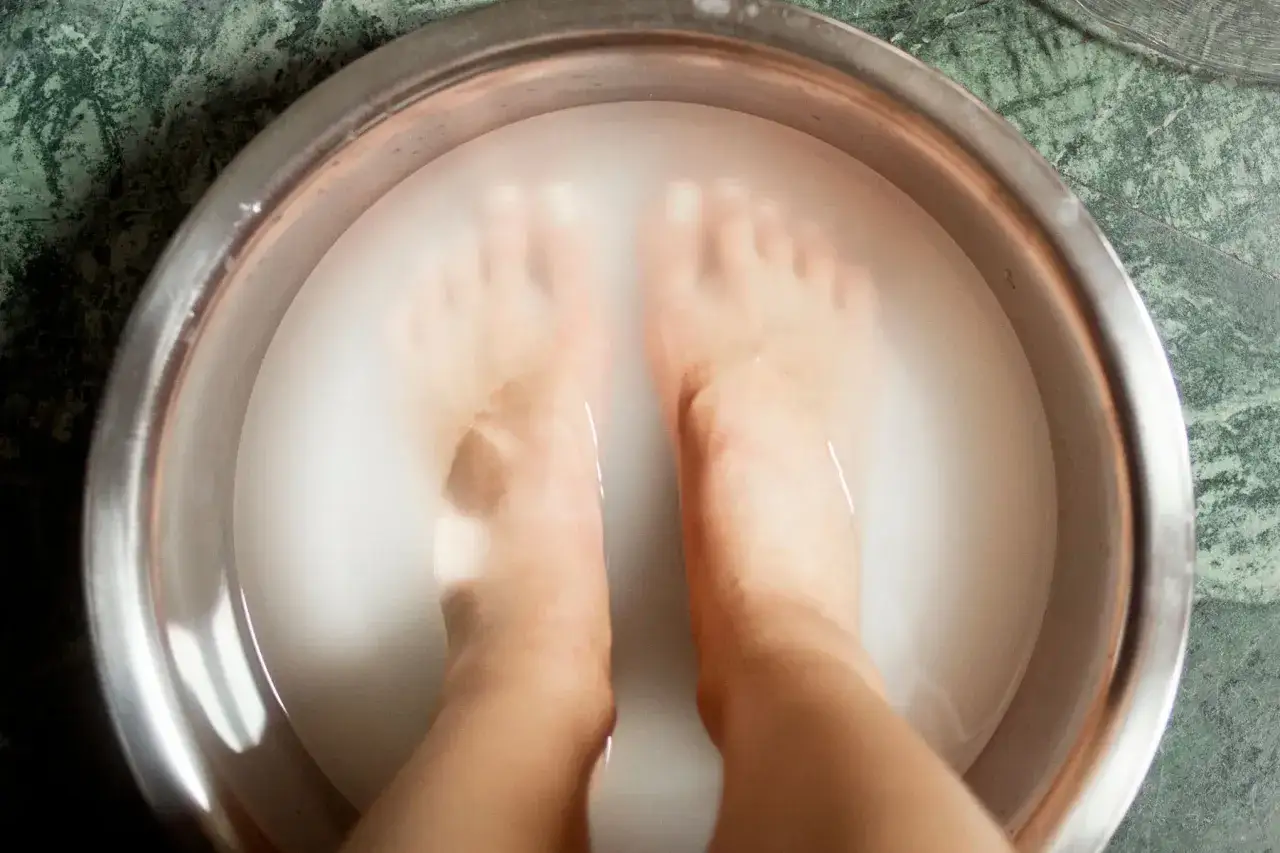
How I set up a safe soak step by step
- Choose a clean basin, washing-up bowl, or foot spa that is stable and big enough for both feet.
- Fill it with water that feels comfortably warm, never hot. If you have reduced sensation in your feet, be more cautious and consider skipping the soak altogether.
- Add only one ingredient at a time if you want one. A simple salt soak is enough; there is no need to mix several remedies together.
- Soak for 10 to 15 minutes. If your skin is delicate, start nearer 5 to 10 minutes.
- Remove your feet and dry them carefully, especially between the toes.
- Finish with a fragrance-free moisturiser on the soles and heels, but not between the toes unless a clinician has told you otherwise.
That sequence is boring in the best way: no drama, no guesswork, and no lingering dampness to invite irritation. Once the routine is in place, the next step is choosing the version that fits the problem you are actually trying to solve.
Choose the soak by the problem you want to solve
Not every foot issue calls for the same treatment. I find it helps to think in terms of the result you want, not just the ritual itself.
| Foot concern | Best soak style | What matters most |
|---|---|---|
| Tired feet after standing or walking | Plain warm water or a mild salt soak | Keep it short, then elevate your feet for a few minutes afterwards. |
| Dry, rough heels | Warm water soak followed by moisturiser | Use the soak to soften the skin, then apply cream while the skin is still slightly damp. |
| Swelling or a hot, puffy feeling | Cool water | Do not force warmth onto a problem that feels inflamed. |
| Ingrown toenail discomfort | Warm salty water | Dry well afterwards and avoid digging at the nail edge. NHS inform specifically recommends this supportive step for an ingrown toenail. |
That table is useful because it exposes the mistake I see most often, which is using one fixed recipe for every foot issue. If the goal is swelling, heat is often the wrong choice. If the goal is rough skin, a soak without moisturising is only half a treatment. From there, the biggest gains usually come from avoiding the small errors that undo the whole benefit.
The mistakes that make a soothing routine backfire
The fastest way to ruin a foot soak is to treat it as more time = more benefit. That is rarely true. A simple routine can become irritating very quickly if you are not paying attention to temperature, timing, and drying.
- Water that is too hot can scald the skin and worsen swelling.
- Soaking for too long can leave the skin wrinkled, dry, and fragile.
- Using too many additives often creates irritation rather than relief.
- Scrubbing hard after soaking can tear softened skin, especially around the heels.
- Leaving the feet damp, especially between the toes, can create the kind of environment that people later mistake for “just a bit of softness”.
- Soaking broken or infected skin can make the problem worse, not better.
If the skin starts to look overly white and soggy, you have probably gone too far for a simple comfort soak. That is a good point to stop, dry carefully, and switch to moisturiser or a different form of care. The same caution becomes even more important in higher-risk situations, which is where the next section matters.
When to skip soaking altogether
NHS guidance is clear for high-risk feet: if you have diabetes, reduced sensation, or circulation problems, routine soaking is not a good default. In those cases, daily washing in warm water and careful drying is usually safer than any prolonged soak. The reason is simple. If you cannot reliably feel temperature, a basin that seems pleasantly warm can be too hot, and skin that is already vulnerable can dry out or break more easily.
I would also avoid a soak if there is open skin, a wound that is not healing, a blister that is being rubbed raw, or signs of infection such as heat, spreading redness, discharge, or fever. If pain is increasing instead of easing, that is not a signal to soak more often. It is a sign to speak to a podiatrist, pharmacist, or GP for proper assessment. Once the risk is handled, the final job is making sure the benefit lasts after the basin is emptied.
How to keep the benefits going after you dry your feet
The soak is only half the job. While the skin is still slightly damp, apply a fragrance-free cream or ointment to the soles and heels. Keep it off the spaces between the toes unless a clinician has told you otherwise. If rough skin is the issue, a gentle pumice stone after the soak is usually enough; hard scraping is how people create cracks.
I also like a simple rule for repetition: once or twice a week is plenty for most people, and even less may be better if your skin dries easily. After moisturising, a clean pair of cotton socks can help lock the cream in for a while. That is the version of foot care I trust most at home, because it is calm, practical, and easy to repeat without making the skin more fragile. A good soak should leave your feet more comfortable, not more dependent on rescue care.